

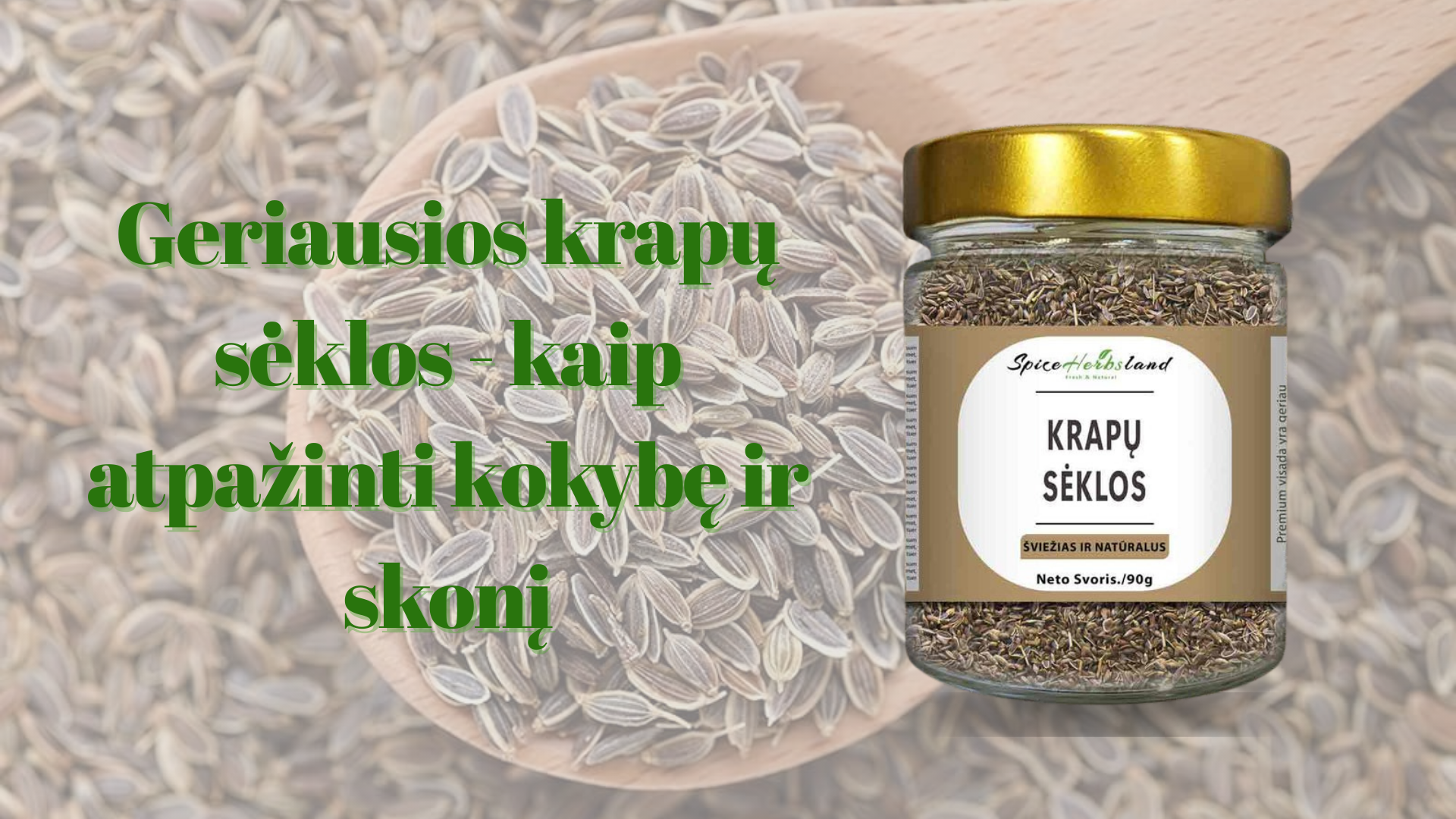
Best Dill Seeds - How to Recognize Quality and Taste
Dill seeds often look similar, but their quality can vary greatly. Some have a strong, warm aroma and distinct flavor, while others have an almost imperceptible scent and a mild effect on dishes. Working with spices at Spice Herbs Land every day, we see why not all dill seeds are created equal, even if they appear identical at first glance.
When choosing the best dill seeds, it's important to evaluate not only their appearance but also their freshness, aroma, and overall quality. Quality dill seeds give dishes a deeper flavor and natural aroma, while inferior ones often go unnoticed. Therefore, the right choice directly impacts how flavors develop in the kitchen.
In this article, we will share how to recognize the quality of dill seeds, what distinguishes their taste and aroma, and when to choose one option over another. This is a practical guide, based on real experience with spices, which will help you choose dill seeds suitable for everyday use.
1. What are dill seeds and how do they differ from fresh dill?

Dill seeds are dried fruits of the dill plant, used as a natural spice. Unlike fresh dill leaves, they have a more intense flavor and concentrated aroma. Due to their higher content of essential oils, dill seeds are more often used for pickling, in spice blends, and in dishes where a longer-lasting flavor is desired.
Key differences:
-
Dill seeds have a stronger and warmer flavor than leaves.
-
The aroma becomes more pronounced when cooked.
-
More often used for seasoning, not garnish.
-
Suitable for long-term storage and slow flavor release.
2. Why it's worth choosing only quality dill seeds
Quality dill seeds have a distinct, warm scent and a natural spice aroma. The aroma of dill seeds depends on the amount of essential oils, which decreases over time. Therefore, fresh, properly stored seeds will always be more intense than old or deteriorated ones.
Flavor intensity becomes particularly important when making marinades, soups, or homemade spice blends. Quality dill seeds pair well with other natural spices, such as coriander seeds, mustard seeds, or caraway seeds, often used together for pickling.
The right quality directly impacts the outcome of dishes. When fresh dill seeds are used together with other dried spices, the flavor remains balanced and natural, and the aroma unfolds gradually.
Old or poor-quality seeds quickly lose their freshness, scent, and flavor properties. Therefore, it's worth choosing reliable spice sources that offer not only dill seeds but also other high-quality dried spices and seeds for everyday kitchen use.
3. How to identify the best dill seeds - key quality criteria

When choosing dill seeds, it's important not to rely solely on the name or package appearance. Quality is determined by several clear indicators that can be noticed even before use. Knowing what to look for makes it much easier to understand how to select quality dill seeds that offer genuine taste and aroma.
3.1 Scent and aroma
The first sign that helps understand how to choose quality dill seeds is the scent. Fresh dill seeds emit a warm, slightly sweet, characteristic spicy aroma. If the scent is faint, dusty, or almost imperceptible, it's a sign that the seeds have already lost some of their properties.
3.2 Appearance and texture
Quality dill seeds are intact, dry, and without cracks. The color is usually brownish-green, and the size is uniform. Dusty or easily crumbled seeds often indicate an old batch or improper storage, which directly affects taste and aroma.
3.3 Taste
The taste and scent of dill seeds should be balanced - slightly bitter, warm, and aromatic. A simple taste test can be performed by crushing a single seed between your fingers or teeth. If the taste is bland or completely neutral, the seeds are likely no longer fresh.
3.4 Freshness and origin
Freshness is one of the most important criteria. Dill seeds, harvested and processed on time, retain more essential oils. It's also worth paying attention to the origin and supplier - reliable sources more often offer consistently high-quality spices.
3.5 Packaging and storage conditions
Quality dill seeds are typically stored in airtight packaging, protected from light and moisture. If the packaging is permeable to air or seeds are stored openly, their aroma and taste will dissipate more quickly. This is a small detail that makes a big difference to the final quality.
4. Dill seed varieties and their differences
Different dill varieties have varying aroma strengths, seed sizes, and uses. The most common varieties are universal and suitable for both everyday cooking and pickling. They provide a balanced flavor that pairs well with other spices and doesn't overpower dishes.
For spices, varieties with a higher essential oil content are more suitable. Such spice seeds stand out with a brighter aroma and a warmer flavor that develops slower, especially when cooked. This is why they are often chosen for soups, sauces, and spice blends.
It is important to distinguish seeds intended for cultivation from those used in culinary applications. Seeds for cultivation are valued for their germination rate and yield, not their flavor properties. Meanwhile, dill seeds intended for culinary use are selected based on their aroma, ripeness, and flavor intensity, making them more suitable for the kitchen.
5. Dill seeds in cooking - when quality matters most

Dill seeds are particularly valued in cooking for pickling and preserving. The stability of the aroma and the depth of flavor are paramount here. Quality dill seeds are often used together with mustard seeds, coriander seeds, or bay leaves, as together they create balanced pickling spices for vegetables and sauces.
In soups, sauces, and bread, dill seeds provide a warm, slowly unfolding flavor. They pair well with other dried spices, such as caraway seeds or peppers, and retain their aroma even during longer cooking times, which is often lacking in lower quality seeds.
In traditional and everyday dishes, dill seeds help achieve a familiar, home-cooked aroma. Combined with other natural spices, they add depth to dishes without excessive intensity.
6. Common mistakes when choosing dill seeds
When choosing dill seeds, small but significant mistakes are often made, which directly affect the taste and aroma. Knowing what to avoid will make it easier to select truly high-quality seeds.
-
Confusing dill seeds with fennel seeds, which have a similar shape but a completely different taste.
-
Choosing seeds that are too old and have lost their aroma and flavor intensity.
-
Judging only by the appearance of the packaging, without considering the scent or condition of the seeds.
-
Not checking storage information, which can result in damp or faded seeds.
-
Buying universal seeds without considering whether they are for seasoning or cultivation.
By avoiding these mistakes, it becomes easier to select dill seeds that will truly enhance dishes with flavor and aroma.
7. How to store dill seeds to preserve taste and aroma

Proper storage of dill seeds helps preserve their natural aroma and flavor intensity. Storage conditions directly affect how long the seeds remain high-quality.
-
Store dill seeds in an airtight container to prevent contact with air.
-
Protect from direct light, which accelerates aroma loss.
-
Avoid moisture and heat, as they promote the degradation of essential oils.
-
Under optimal conditions, the shelf life of dill seeds is about 1-2 years.
-
If the scent is weak or the taste is bland, it's a sign that the seeds should be replaced.
Regularly checking stored dill seeds ensures that only aromatic and high-quality spices are always used in the kitchen.
8. Where to buy quality dill seeds
When deciding where to buy dill seeds online, a reliable supplier is important. Quality often depends on selection, storage, and turnover speed. Reputable sources clearly indicate origin, offer airtight packaging, and ensure freshness.
When buying online, it's worth paying attention to descriptions, customer reviews, and whether other natural spices are offered. This makes it easier to choose not only dill seeds but also a whole range of high-quality spices. This approach, focused on quality and reliability, is crucial when selecting a long-term spice source, as is done in the context of Spice Herbs Land.
9. Conclusion
When choosing the best dill seeds, the most important factors to consider are aroma, flavor intensity, freshness, and storage conditions. These criteria determine the true quality of dill seeds and their value in the kitchen.
A conscious choice not only improves the taste of dishes but also avoids disappointment with poor-quality spices. When selecting quality spices and herbs, it is worth prioritizing reliable sources and products that maintain natural aroma and taste for everyday use.


